
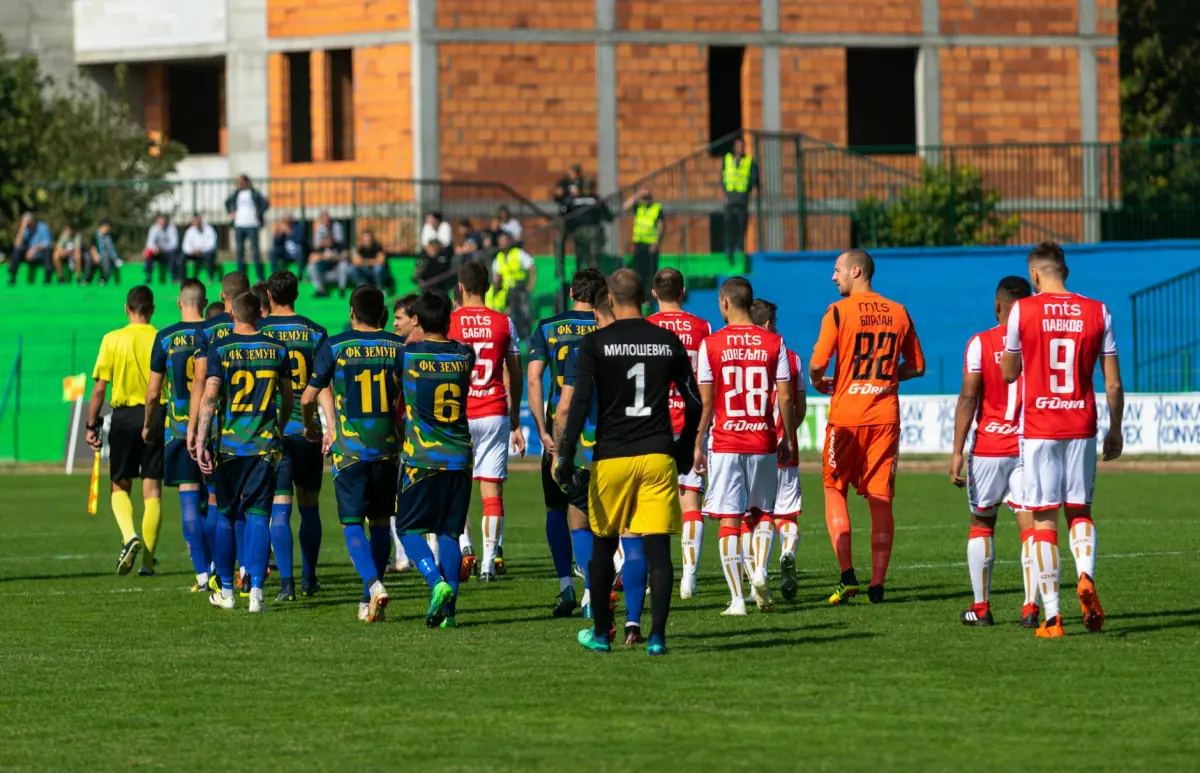
Most underdog teams do not lose because they are less talented. They lose because they copy the game plan of larger competitors who have different economics, slower risk exposure, and bigger distribution buffers. When a small team tries to look like a market leader, it usually burns cash and attention without building a defensible edge.
The alternative is not to “work harder.” It is to position tighter, decide faster, and execute around constraints as if constraints are design assets. This playbook breaks down how smaller teams can win market share without pretending to be something they are not.
Pick a battlefield you can actually dominate instead of a market you cannot outspend
Underdog strategy starts with scope. If your category is too broad, your message becomes generic and your costs rise before your conversion quality improves. The first strategic move is to reduce your battlefield to a segment where your team can show obvious superiority in expertise, response speed, or implementation quality.
A practical way to do this is by filtering your market through three lenses: urgency, complexity, and dissatisfaction with current options. If your target segment has painful unresolved problems and incumbents are serving it with generic solutions, you have room to win quickly. Positioning should then reflect this precision by naming the exact customer profile, exact pain, and exact outcome you solve better than generalists.
Design your offer around decision speed and measurable outcomes
Large competitors often optimize for process consistency at scale. Smaller teams can outperform by reducing friction and proving outcomes faster. That means your offer should be structured for quick understanding, quick onboarding, and visible progress in early engagement windows.
Instead of selling many loosely related services, package one flagship offer with clear boundaries, delivery steps, and success criteria. Clarity converts better than variety when trust is still being formed. Your buyer should know what happens in week one, what evidence they will see by week two, and what decision they can make by week four. This timeline-based certainty is a major advantage against slower, layered organizations.
Avoid price wars and compete on risk reduction clarity and confidence
Discounting can generate short-term attention but often attracts low-fit customers and compresses margins exactly where small teams need financial oxygen. Underdogs should compete on confidence architecture: transparent process, clear deliverables, realistic timelines, and proactive communication at decision points.
When buyers understand the execution path and downside controls, they pay for reduced uncertainty, not just lower rates. Build this into proposals with milestone check-ins, explicit scope control, and quantified targets where possible. If a prospect still compares purely on price, that is usually a signal of weak fit. Strategic discipline means saying no to deals that destabilize your operating model.
Build a message system that repeats one strategic promise everywhere
Operational check for this area: write the exact term into a quick pre-deposit checklist, test it against your normal bankroll and session rhythm, and confirm it with support before you commit funds. If the operator cannot explain this rule clearly and consistently, treat that uncertainty as a direct cost and reject the offer.
Inconsistent messaging kills underdog momentum. Your website, proposals, sales calls, and content should reinforce one strategic promise in different forms. If your positioning shifts every week, the market reads uncertainty and defaults to familiar incumbents.
Create a simple message stack: core claim, supporting proof, and expected result window. Then apply it consistently across channels. Repetition is not boring when it is precise. It is how trust compounds. The goal is for a buyer to hear your name and immediately understand what specific problem you solve and why your team is structured to solve it efficiently.
Use operating cadence as a competitive weapon not an internal admin routine
Operational check for this area: write the exact term into a quick pre-deposit checklist, test it against your normal bankroll and session rhythm, and confirm it with support before you commit funds. If the operator cannot explain this rule clearly and consistently, treat that uncertainty as a direct cost and reject the offer.
Many small teams run on urgency instead of cadence, which feels productive but creates erratic output quality. A weekly execution rhythm is one of the most underused strategic levers for underdogs. It turns learning into adaptation before competitors even detect pattern shifts.
Run a fixed weekly cycle: pipeline review, conversion diagnostics, delivery quality audit, and offer refinement. Track a small metric set that links strategy to execution: lead quality, close rate, time-to-value, retention, and referral velocity. This cadence helps you spot where positioning drifts, where buyers stall, and where delivery friction reduces repeat business.
Turn client feedback into positioning upgrades instead of random tweaks
Operational check for this area: write the exact term into a quick pre-deposit checklist, test it against your normal bankroll and session rhythm, and confirm it with support before you commit funds. If the operator cannot explain this rule clearly and consistently, treat that uncertainty as a direct cost and reject the offer.
Underdogs often collect feedback but fail to convert it into strategic improvements. The difference between noise and signal is classification. Group feedback into themes: expectation mismatch, onboarding friction, delivery clarity, and outcome confidence. Then rank by frequency and revenue impact.
Use this ranked list to update your message, offer scope, and process checkpoints quarterly. This creates a closed loop where operations continuously sharpen market fit. Teams that do this consistently improve conversion quality and reduce churn without expensive acquisition spikes, because they are learning faster than competitors and translating learning into visible market signals.
Scale selectively by protecting what made the underdog model work
Growth can break underdog advantage if you copy the bureaucracy of larger firms too early. Scale should preserve your core edge: speed, specialization, and accountability. Add structure where it improves reliability, but avoid process layers that slow decisions and dilute ownership.
Before hiring or expanding channels, define which behaviors are non-negotiable and which can evolve. Protect direct customer insight loops, keep decision rights close to operators, and document only the processes that are repeated enough to matter. Strategic scaling is not about becoming bigger fast. It is about becoming stronger without losing the very mechanics that helped you win in the first place.
Use this 30-day underdog execution sprint to create immediate traction
Week one: tighten segment definition and rewrite your core positioning statement. Week two: package one flagship offer with clear outcomes and milestone timeline. Week three: align all customer-facing messaging and run focused outreach to ideal-fit prospects. Week four: review conversion and delivery signals, then adjust scope or messaging based on evidence.
This sprint creates movement because it combines strategy and execution in one loop. By the end of 30 days, you should have clearer demand signals, better-fit leads, and more confidence in your market claim. Underdog teams that commit to short learning cycles and disciplined positioning do not need to outspend incumbents. They need to outfocus and outadapt them.