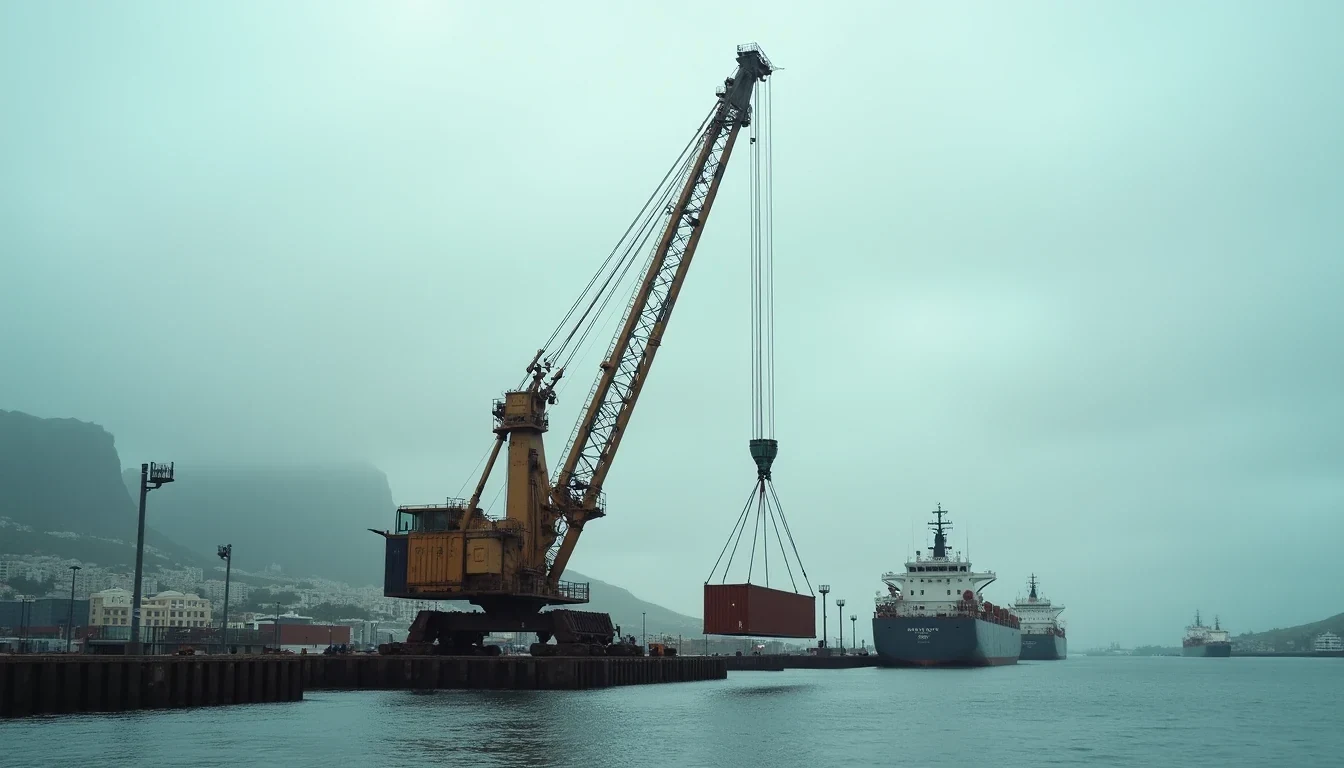
Cape Town’s container port is still being judged against a global shipping reroute that should have been a gift. The World Bank and S&P Global Market Intelligence put it 400th out of 400 in the 2025 Container Port Performance Index, after Cape Town and Ngqura landed 404th and 405th out of 405 ports in 2023. For a city that sells itself as a maritime gateway, this is a brutal scoreline.
The timing is worse than the ranking. Red Sea instability has pushed vessels around the Cape of Good Hope at more than triple the earlier volume, from about six ships a day in 2023 to about 20 by early 2026. Cape diversions were up 112 percent by March 2026. Instead of cashing in, South Africa is watching Mauritius and Namibia pick up bunkering and wider maritime services work that should be feeding Cape Town.
A port that stayed stuck
This is a structural failure, not a bad month or a run of awkward weather. Cape Town is carrying old equipment, clogged yards, and years of neglect under Transnet. A 2024 review blamed the mess on years of negligence, poor maintenance, and corruption. This is not a temporary hiccup. It is a maintenance backlog that has been allowed to become a business model.
Old gear slows every lift. Congestion slows every queue. Together, these make the port a place where ships lose time instead of turning it. This is a disastrous setup for a route that is suddenly seeing far more traffic than planners expected even a few years ago.
The Cape route is busier than the harbour
The numbers around the Cape of Good Hope have moved fast. A route that saw roughly six vessels a day in 2023 is now handling about 20 by early 2026. Cape diversions were up 112 percent by March 2026. This is live traffic, passing the coast right now.
Every extra call opens the door to fuel, fresh water, waste handling, pilotage, tug support, repairs, and crew supply runs. Cape Town should be the obvious place to skim some of that spend. Instead, the first big winners have been the ports and service hubs ready to move quickly. Mauritius and Namibia are already taking market share in bunkering and related services while Cape Town keeps fighting its own bottlenecks.
The gains are real but not fast enough
Transnet’s 2025 Integrated Report does show progress. Cape Town’s ship turnaround time has fallen from 103 hours to roughly 58 hours over about two years. Container throughput has also improved sharply since June 2025.
These are not cosmetic gains. They show the port is moving better than it was. The problem is the baseline was so poor that decent improvement still leaves Cape Town well short of what this moment demands. A port that is getting better slowly is still losing money if the traffic surge is moving faster than the upgrade cycle.
The money is leaking elsewhere
This is where the damage becomes visible. A diverted vessel is spend waiting to happen. If Cape Town cannot handle the extra flow quickly enough, the cash goes elsewhere. Fuel contracts go elsewhere. Service fees go elsewhere. Repairs go elsewhere. Even the smaller spending around crews, provisioning, and local suppliers drifts away.
South Africa keeps missing this point. The coastline has become more valuable because global shipping has changed shape, but the benefit is being captured by places that were ready before the traffic spike arrived. Years of underinvestment turned a strategic location into a slow lane.
Geography was supposed to do the heavy lifting
The Cape of Good Hope is doing its job. The port is not. South Africa was handed a rare rerouting boom and then let the supporting machinery fall behind the moment. The geography is still working, but the institutions built around it have been too slow to convert traffic into revenue.
A serious recovery would need to move at shipping speed, not procurement speed. Until that happens, Cape Town will keep looking like a port that arrived late to its own advantage, while the windfall sails past the quay and into somebody else’s books.